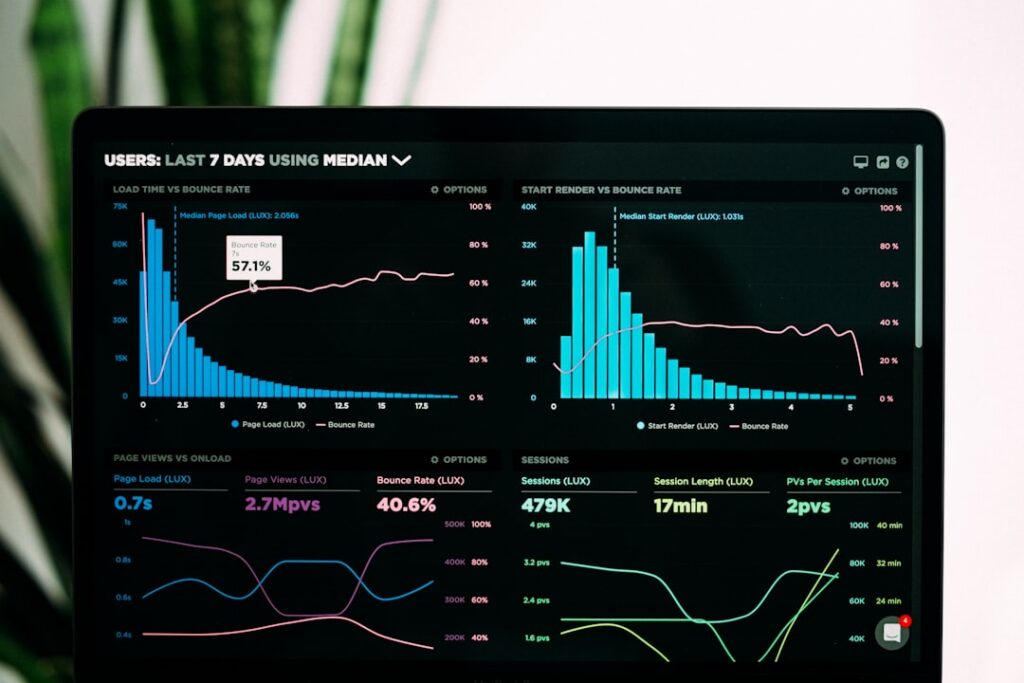
Why AI-Driven Decision Making Matters
Ever felt swamped by data? You’re not alone. Small businesses drown in numbers—customer clicks, market trends, competitor moves. But raw data is like a jigsaw without the picture on the box. That’s where AI-driven decision making comes in. It’s the process of using smart algorithms to sift, sort and serve up the exact insights you need—when you need them.
Research shows the global big data analytics market will hit $1.1 trillion by 2032. That’s serious cash. But money alone won’t move the needle. You need to turn figures into foresight. Here’s how AI market intelligence helps:
- Spot trends before they’re trends.
- Tailor campaigns with surgical precision.
- Respond to competitor moves in real time.
In short, AI-driven decision making gives you the edge. It’s no longer a luxury. It’s your ticket to survival.
What Is AI Market Intelligence?
At its core, market intelligence is about getting the right information at the right time. Add AI, and you turbocharge that process. Think of it as having a tireless research assistant that never sleeps. It combs through:
- News articles and social media
- Industry reports and regulatory updates
- AI-powered search outputs (like ChatGPT or Claude)
Then it distils the noise into clear signals. You get:
- Tactical intelligence—news about a new hire at a prospect so you can connect with the right person.
- Operational intelligence—early warnings when a rival pivots messaging.
- Strategic intelligence—forecasts on tech adoption so you can time investments.
All of this feeds into AI-driven decision making for small businesses.
The Building Blocks of an AI Market Intelligence Strategy
Ready to get practical? Here are the core components:
-
Define your intelligence needs
• What decisions keep you up at night?
• New markets? New products? Risk management? -
Gather diverse data sources
• Competitor sites, social channels, forums
• Supplier reports, trade publications
• AI chat transcripts, automated alerts -
Analyse with AI-powered tools
• Natural language processing for sentiment
• Machine learning for trend forecasting -
Share actionable insights
• Simple dashboards
• Alerts for critical shifts -
Act and refine
• Test one change at a time
• Measure via Key Performance Indicators (KPIs)
This continuous cycle cements AI-driven decision making in your operations.
Choosing the Right AI Tools for Your Business
Not all tools are born equal. Many legacy platforms—SEMrush, Ahrefs, Moz—focus on traditional SEO or web analytics. They can feel clunky, pricey and overkill for a small team.
Enter affordable, open-source solutions that zero in on AI visibility. For instance, AI Visibility Tracking for Small Businesses monitors how AI engines describe your brand, surfaces mentions and flags competitor appearances. It’s built for non-technical users. No heavy onboarding. No hidden fees.
And if you need content generation? Check out Maggie’s AutoBlog, an AI-powered platform that auto-writes SEO and GEO-targeted blog posts based on your website. It takes the grunt work off your plate so you can focus on strategy.
Picking tools is easier when you match features to needs:
- Ease of use
- Real-time monitoring
- Integration with existing workflows
- Scalability as you grow
Real-World Example: Tactical Intelligence in Action
Imagine you run a local eco-friendly candle brand. A major news outlet features “sustainable home decor” on AI chat portals. You get an alert. You tweak your next email campaign to mention that trend. Boom—open rates jump by 20%.
That’s AI-driven decision making at work. You didn’t wait for monthly reports. You acted in hours.
Measuring Success: KPIs for AI-Driven Decision Making
You need to prove ROI. Here are KPIs that matter:
- Decision velocity (time from insight to action)
- Lead quality and conversion rates
- Changes in AI-generated brand visibility scores
- Competitor mention frequency
- Forecast accuracy
Track these metrics in simple dashboards. Celebrate wins. Pivot fast on misses.
Case Study: Maggie’s AutoBlog in Action
A boutique travel agency struggled to keep up with blog calendars. They adopted Maggie’s AutoBlog. Within weeks, they published high-quality, location-specific posts that AI chatbots picked up. Organic traffic grew by 35%. Brand mentions in AI responses doubled.
That’s the power of combining content automation with AI market intelligence.
Best Practices and Common Pitfalls
Do this
– Start small. Tackle one use case first.
– Involve your team. Get buy-in.
– Focus on clean data. Garbage in, garbage out.
– Set review cadences. Make it a habit.
Avoid this
– Chasing every trend. Pick what matters.
– Ignoring context. Numbers need narratives.
– Letting insights sit unused. Act fast.
Wrapping Up
AI-driven decision making isn’t rocket science. It’s about using smart tools to make faster, better choices. Small businesses win when they:
- Gather diverse data
- Analyse with AI
- Act on real-time insights
Ready to bring AI market intelligence into your daily grind?