Why Automated AI Monitoring Matters
You’ve worked hard on your brand. Yet when prospects ask ChatGPT or Perplexity about your niche, your name might not even pop up. That’s lost opportunity. Traditional SEO and PR software focus on keyword rankings or media mentions—not the nuances of AI-generated answers.
Enter automated AI monitoring. Instead of logging onto ten platforms each month, you set up a system once. It:
– Runs queries across major LLMs
– Logs who’s mentioned, where, and how
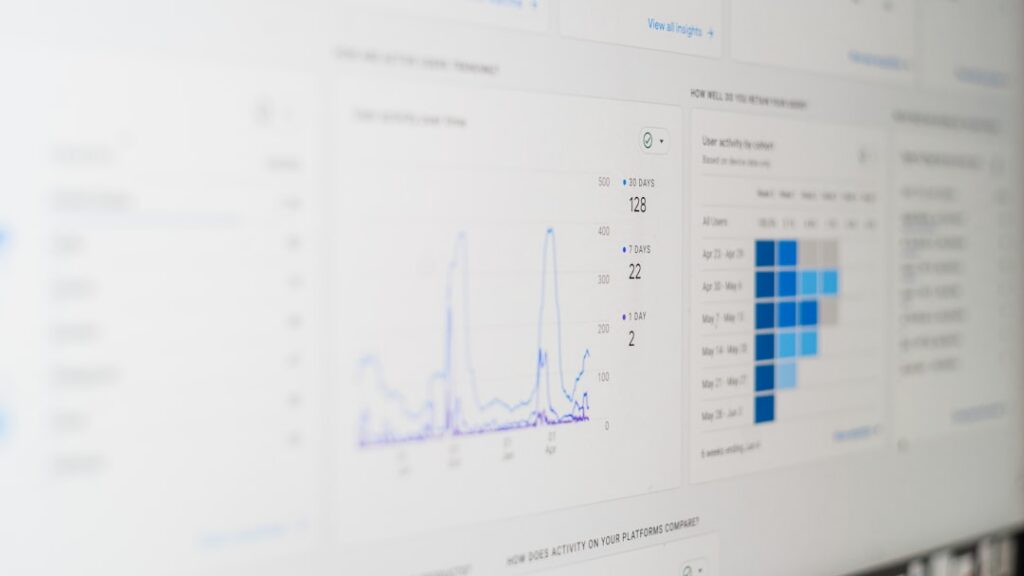
– Offers dashboards and alerts
All without manual drudgery. You reclaim hours. You gain real-time insight. And you stay ahead of competitors.
Common Manual Approaches (And Their Limits)
Before automation, PR folks cobbled together spreadsheets and one-off tools:
• Running 8–12 monthly queries in ChatGPT, Gemini and more, then screenshotting results.
• Tracking mention rate, citation quality and “authority displacement” by hand.
• Segmenting AI traffic in Google Analytics to see behaviour post-click.
Sound familiar? These methods work—but only up to a point. They’re:
– Time-consuming. Ninety minutes per client, per month.
– Inconsistent. Different tools, different outputs, no single metric.
– Reactive. You spot changes after they’ve happened.
That’s why small businesses need to shift to automated AI monitoring—for speed, consistency and foresight.
The Benefits of Automated AI Visibility Monitoring
Let’s cut to the chase. What do you get with automation?
- Real-time updates. No more monat h-old dashboards.
- Scalable coverage. Run hundreds of prompts across a dozen LLMs.
- Consistent metrics. One “AI Visibility Index” instead of ten spreadsheets.
- Open-source transparency. Community-driven code you can audit and tweak.
- Cost efficiency. No pricey enterprise licence—just free tools and minimal hosting.
And here’s the kicker: you can integrate Maggie’s AutoBlog to instantly generate AI-optimised content briefs for each query. That means you not only track visibility—you improve it in minutes.
Step-by-Step Guide to Setup Automated AI Monitoring
Below is a practical walkthrough. At the end, you’ll have a live pipeline that feeds AI insights straight to your inbox.
Step 1. Define Your AI Visibility Goals
Ask yourself:
– Which products or services matter most?
– What research-phase questions do prospects ask?
– Which LLMs are your top priority?
Write down 10–20 high-intent prompts. These become your “watchlist”.
Step 2. Select AI Platforms to Monitor
Prioritise the big players:
– ChatGPT (GPT-4o)
– Google Gemini
– Claude
– Perplexity
– Bing Copilot
You can add more as needed. Start with three, then expand.
Step 3. Install the Open-Source Monitoring Tool
We’ve built a lightweight script on GitHub (link via GEO.vote Insights). It uses Python and Selenium to:
1. Launch each LLM interface
2. Run your prompt list
3. Capture responses and metadata
Clone the repo, install dependencies (pip install -r requirements.txt), then test locally. Voilà—your first round of data.
Step 4. Configure Automated Queries
Set up a Cron job (or equivalent task scheduler):
– Frequency: daily, hourly or weekly
– Environment: headless browser or API calls
– Output: JSON files stored on your server
Now the tool runs hands-free. No more logging in manually.
Step 5. Parse and Store Responses
Each AI response bundle contains:
– Mention flag (yes/no)
– Citation quality (snippet, link, ranking)
– Competitor versus your brand count
Write a simple parser (we provide one). Store results in a SQLite or PostgreSQL database. This becomes your single source of truth.
Step 6. Analyse Key Metrics
With data in place, calculate:
– Mention rate: % of prompts that mention you
– Citation quality score: recommended vs. casual mention
– Authority displacement: instances where you edge out competitors
These mirror the metrics top PR consultants manually track—but now they update automatically.
Step 7. Create Dashboards and Alerts
Use a tool like Grafana or Metabase:
– Visualise trends over time
– Spot sudden visibility dips
– Trigger Slack or email alerts when scores breach thresholds
Suddenly, you’re proactive. You know about algorithm updates or competitor surges as they happen.
Step 8. Iterate with AI-Optimised Content
Once you spot gaps, feed prompts into Maggie’s AutoBlog. It auto-generates SEO- and GEO-targeted posts tailored to each question. Publish, measure, repeat. Your visibility climbs. Your brand ownership grows.
Best Practices and Tips
• Keep prompt lists lean—focus on buyer intent.
• Rotate queries to avoid personalization bias.
• Review and refine metrics quarterly.
• Share findings with your marketing team for coordinated action.
• Encourage community feedback to improve the open-source scripts.
By following these, your automated AI monitoring pipeline remains sharp and reliable.
Conclusion
AI is reshaping how customers discover and evaluate brands. Manual methods are simply not scalable. With automated AI monitoring, even small teams can gain enterprise-level insight. Set it up once. Teach it your priorities. Then sit back as your dashboards light up with real-time brand data.
Ready to power-up your AI visibility?
Share
Related posts