
Why This AI Search Visibility Guide Matters to Your Small Business
AI search is no longer a sci-fi buzzword. It’s the way your customers find answers, make choices, and decide on products. This shift demands a fresh approach—Answer Engine Optimization (AEO). Think of this piece as your AI search visibility guide: a roadmap to get your brand cited by ChatGPT, Google AI, Perplexity and more.
Small businesses usually lack the budgets of enterprise SEO teams. You need simple, actionable tactics. In this AI search visibility guide, we’ll cover everything from technical checklists to content hacks. You’ll learn how to track your mentions, benchmark your performance, and keep competitors from stealing the limelight.
Ready to track your brand with precision? AI search visibility guide: Track your small-business performance
What Is Answer Engine Optimization and AI Visibility?
AEO stands for Answer Engine Optimization. It’s not just SEO with a new name. Traditional SEO hunts for rankings in result lists. AEO aims to get your brand mentioned inside AI-generated summaries. When someone asks, “What’s the best invoicing software for freelancers?”, your goal is to pop up in that one answer.
How AEO Differs from SEO
- SEO focuses on clicks. AEO focuses on citations.
- SEO tracks page ranks. AEO tracks share of voice in AI responses.
- SEO measures organic traffic. AEO measures zero-click visibility.
A solid AI search visibility guide must teach both. Nail your on-site fundamentals—fast pages, clean HTML, structured data. Then layer in AI-specific tactics: semantic “chunks,” listicles, snippet-friendly headings.
Curious about how your brand currently fares? Learn how AI visibility works for your brand
Benchmarking and Tracking Your AI Presence
You can’t improve what you don’t measure. Start with a baseline:
- Set up GA4 to spot LLM traffic.
- Record share of voice across ChatGPT, Google AI Overviews, Perplexity, Bing Copilot.
- Identify top queries and missed opportunities.
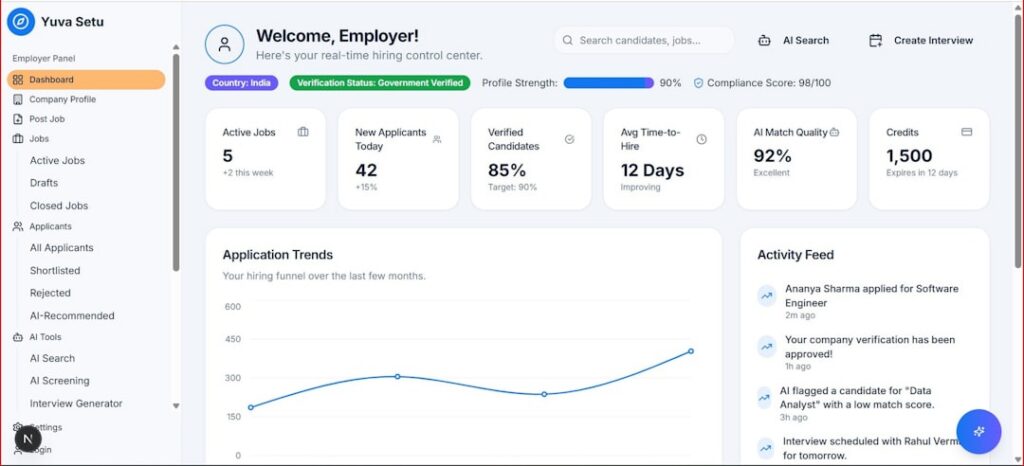
Our AI Visibility Tracking for Small Businesses tool makes this affordable. It scans AI responses daily. It flags brand mentions, competitor names, sentiment. Solo founders and small teams finally get enterprise-level insights without a huge bill.
Tip: Use share-of-voice charts to see growth. Month by month. Easy to present in client decks or board updates.
Need hands-off monitoring? Help your small business gain organic traffic and AI visibility effortlessly
Technical Foundations for Maximum AI Search Visibility
AI crawlers aren’t as smart as Googlebot. They often don’t run JavaScript. They have tight time budgets. Here’s your mini checklist—the technical side of our AI search visibility guide.
- Raw HTML content. Avoid burying text in JS frameworks.
- Server-side rendering. Faster loads = more reliable crawling.
- JSON-LD schema. Use specific types: FAQ, HowTo, Product.
- Semantic HTML5:
<header>,<main>,<section>,<aside>. - Logical headers. One H1, clear H2s and H3s for sections.
- Fast page speed. AI bots don’t wait.
- Freshness signals. Add published and modified dates.
Bonus: Create llms.txt to guide LLM crawlers. It can boost your crawl rates by up to 10%. This small tweak can deliver big wins.
Content Strategies That AI Engines Love
Good writing still matters. AEO favours formats that are scannable and direct. Use our AI search visibility guide principles to structure your content.
1. Break into Semantic Chunks
Each paragraph should answer one question. AI models extract “snippets.” If your content chunks map directly to queries, you become the go-to source.
2. Listicles Are Gold
Lists account for about 32% of AI citations. Use bullet points and numbered steps. Easy extraction. Easy citation.
3. Snippet-Friendly Headings
Write headings that stand alone. “Top 5 Invoicing Tools for Freelancers, 2025” works better than “Invoicing Tools”.
4. Fresh, Recent Content
LLMs favour newness. Add the year in titles and URLs. Example: /best-invoicing-apps-2025.
5. Local and Geo-Targeted Signals
Even national brands get local pins. Google AI Mode pulls from Google Business Profiles. Optimise your listings. Keep NAP data consistent.
Need more local depth? Explore practical GEO SEO strategies
Thinking of this as your AI search visibility guide means weaving these tactics into every new post.
Midway Check-In: Benchmark Again
You’ve covered the basics. Now benchmark again. See your share of voice shifts. Spot slides or spikes. Adjust your strategy.
This is a critical moment in the AI search visibility guide. If mentions stall, it’s time to revisit your tech or content. If growth is steady, rinse and repeat.
Don’t skip this. Discover our AI search visibility guide to benchmark performance
Common Pitfalls and How to Avoid Them
Even pros slip up. Here are mistakes you want to dodge:
- Relying on JavaScript for key content.
- Burying your main answer beyond the first 160 characters.
- Using generic schema like
WebPageinstead ofProductorFAQ. - Ignoring cross-channel authority: social, video transcripts, forums.
- Failing to track competitor visibility in AI.
- Underinvesting in original research or unique data.
This is part of your AI search visibility guide’s last chapter: avoid these traps.
Putting It All Together
AEO doesn’t replace SEO. It evolves it. You still need solid on-page work. But you must add AI-focused layers:
- Technical readiness
- Semantically structured content
- Local and geo signals
- Ongoing visibility tracking
- Cross-channel brand building
When you follow this AI search visibility guide, your small business steps into the AI-first future. You’ll win citations. Gain trust. Outpace bigger budgets.
Ready for the next step? AI search visibility guide: Get your small-business scorecard now
Share
Related posts